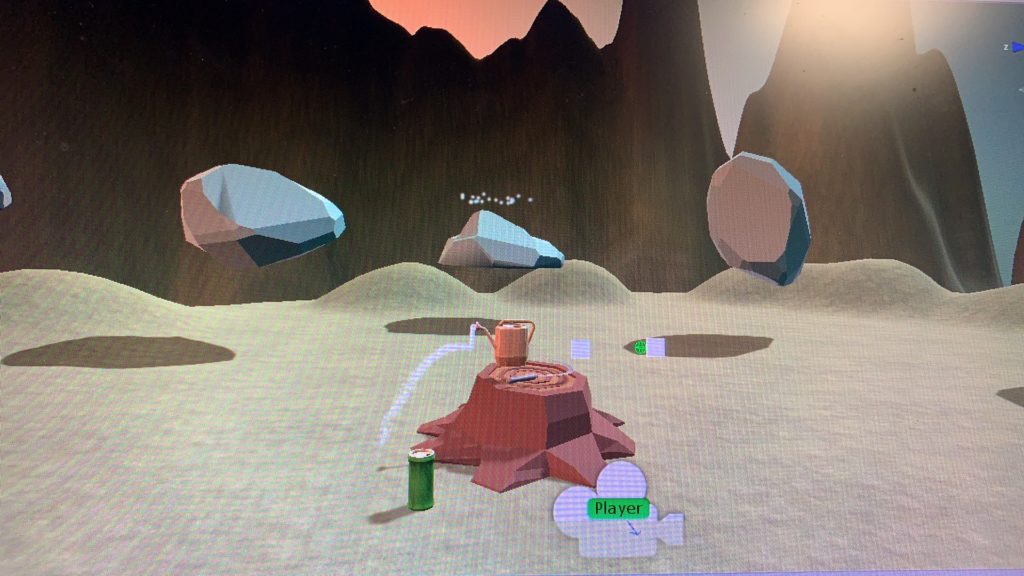
Mar 3
Our group: Vivian, Adham, Cassie, Nico
We started off with some brainstorming for our interactions and actions:
Initial Ideas:
- Throwing crumpled paper into a basket
- Implement points based on how far back you are → makes you move around
- Obstacles (desk, etc.)
- Crumpling paper
- Classroom, library
- Putting food onto tray- cafeteria
- Washing face
- Taking care of plants
- Zen
- If you cut the plants they just float around
- Twisting knob motion to speed up time → plants grow, lighting changes
- Drawing
- Slingshot
- Flipping coin into fountain
- Something could pop out, you have to catch it
After deciding on the plant idea we enjoyed, we decided to go more into details:
Taking care of plants:
- Time
- Lighting changes
- Sun/moon
- Plant growth
- Environment ideas:
- Dorm room
- Windowsill
- Small cottage
- Outside garden, fence
- Interaction
- Watering
- Cutting
- Picking fruit/flowers
- Growing bamboo
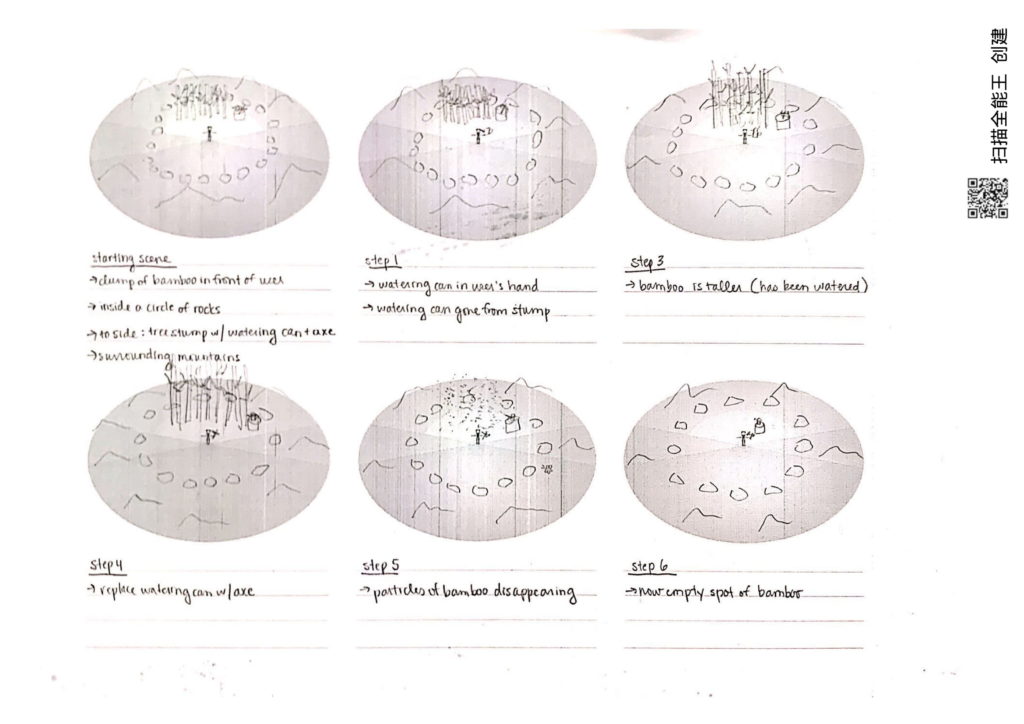
With a solid idea in mind, we went ahead and designed our storyboard:
–Step 1–
Clump of bamboo in front of you
To your side: tree stump with watering can + cutting tool
Surrounding mountains and other bamboo
You’re inside a circle of rocks
Butterflies are flying around
It’s golden hour
–Step 2–
You have the water picked up
Water is gone from stump
–Step 3–
Bamboo is taller
–Step 4–
Replace water with axe
Now the water is back on the stump and the axe is gone
–Step 5–
Show the particles of the bamboo disappearing
–Step 6–
Now an empty spot of bamboo
Our storyboard:
Mar 6
After our group roles were self-assigned, of which I got the responsibility of scripting, I thought it would be important to start as soon as possible. Since I knew very little about C#, Unity, and scripting, I got to practice immediately.
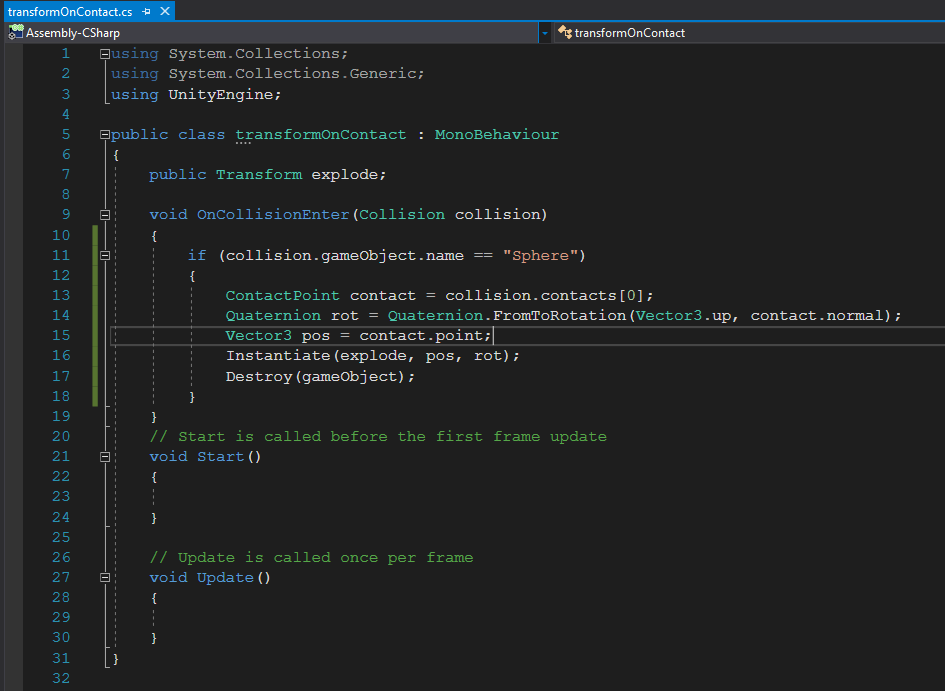
The first goal for the day was to play around with some scripts from SteamVR and the online unity manuals. The first script I created was heavily dependent on what I found online. I assembled a script that caused an object to turn into a new prefab once it collided with a sphere. In order to make this functional I had to make sure the sphere and the cube both had rigid bodies and colliders. I also made sure that I could throw the sphere, by using the components from SteamVR, so that I could pick it up by using the back button of the remote. The prefab the sphere turned into was a cup from another asset pack. This was quite a hilarious scene but very beneficial because it taught me how to identify a specific prefab to use as a transformation and to prevent the same effect when touching any other named object.
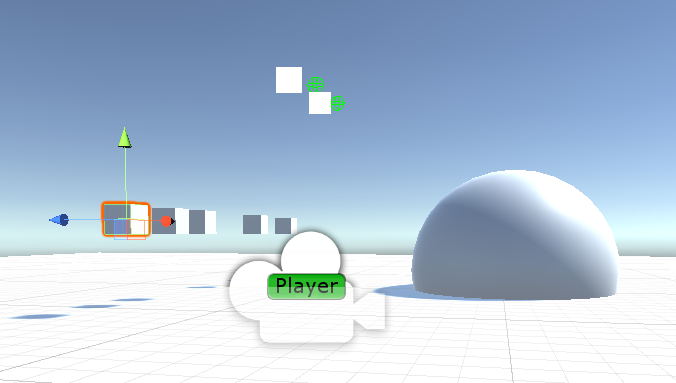

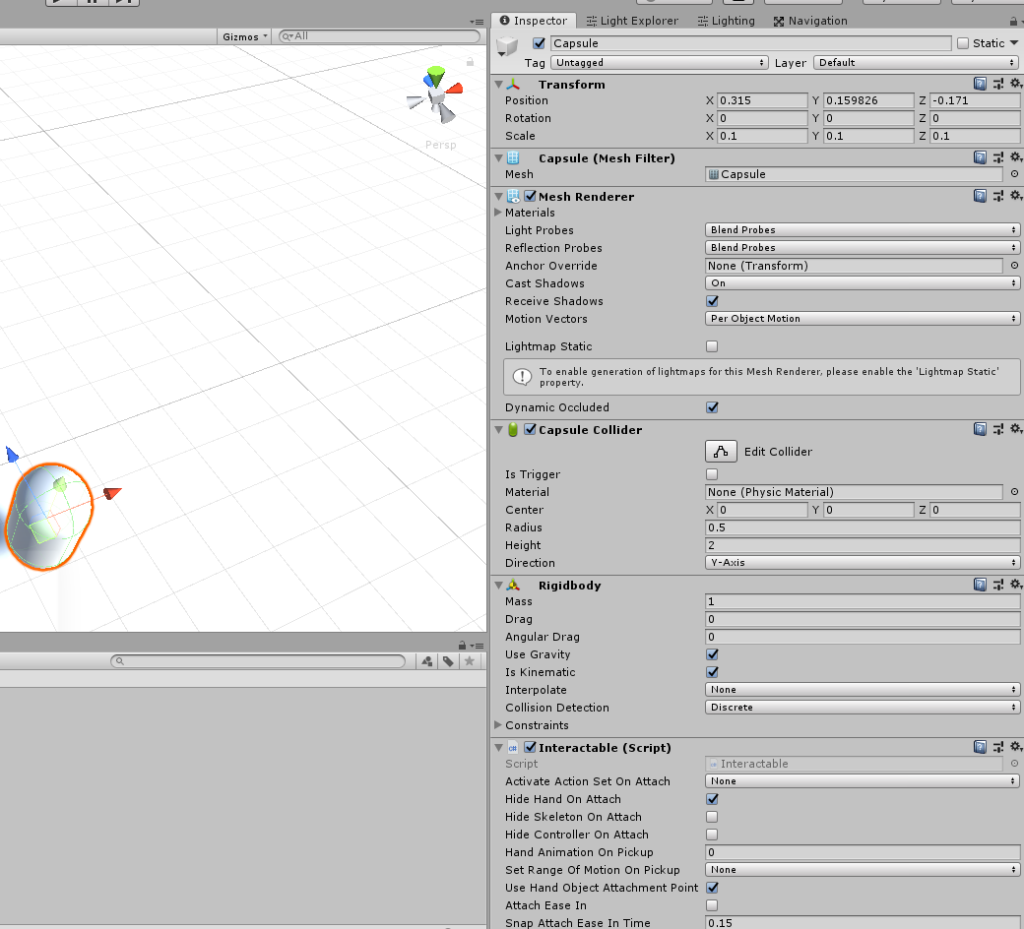
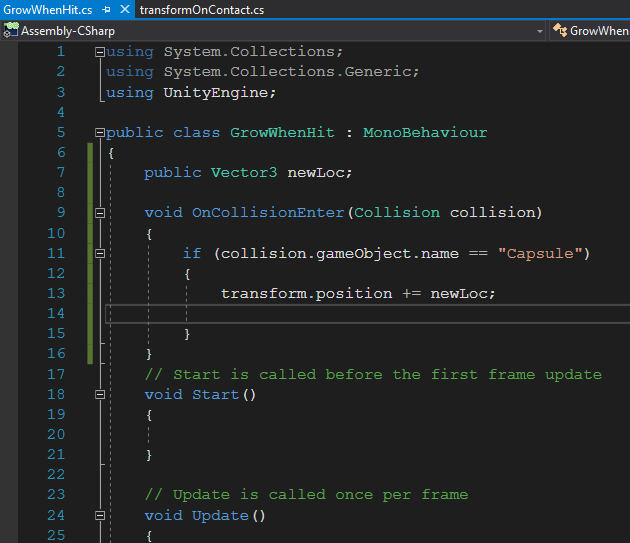
The next project was to a script that would imitate the effect of bamboo disappearing when hit with a sickle. I used a capsule in place of the sickle and I made the movement occur by placing a public variable. The movement could be in any direction, it would just add that amount to the current position. The cylinder I attached this script to needed to have a rigid body and a collider in order have effect. I also made sure gravity was activated because whenever I hit it with the capsule I wanted it to fall back down to the floor. The large issue I found with this set up was that the cylinder could fall out of reach really easily and there was no way of reobtaining it.
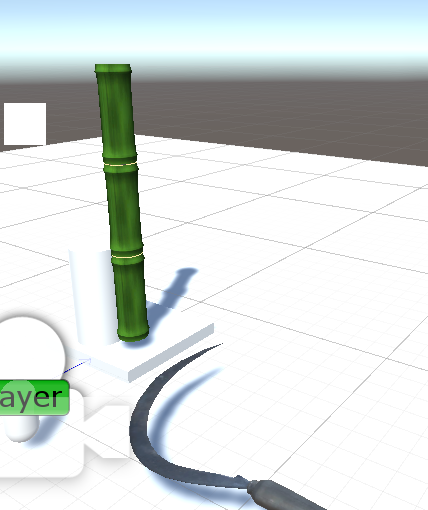
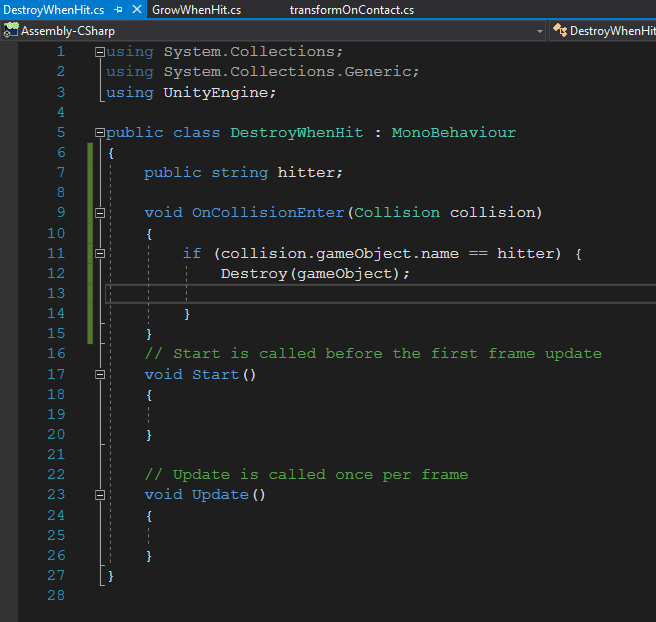
Realizing how easy it was to make effect occur on object I brought in several prefabs for similar experiments. I brought in a sickle and stacked bamboo cups (to imitate a bamboo shoot). The script that I created this time was a lot simpler. Whenever the sickle made collision with the bamboo it would simply destroy the object. This is very effective it making it look like the shoot was being shopped at different areas. If many cups were stacked then I believe it would be quite entertaining to see all of the fall down or have some separate effect. This could be played with a bit to obtain the desired result, I will have to discuss with the group a bit. Overall, today I have found a way to make tools able to be picked up and come in contact with bamboo shoots that could either be blown away or deleted.

Mar 8
Today I started off by recreating a really crude representation of the environment. I did this so that I could start writing scripts that would be realistic of the area that the object will be placed in at the end. This are included a table, the 2 tools to be used (sickle and water can), and a patch of soil with bamboo.
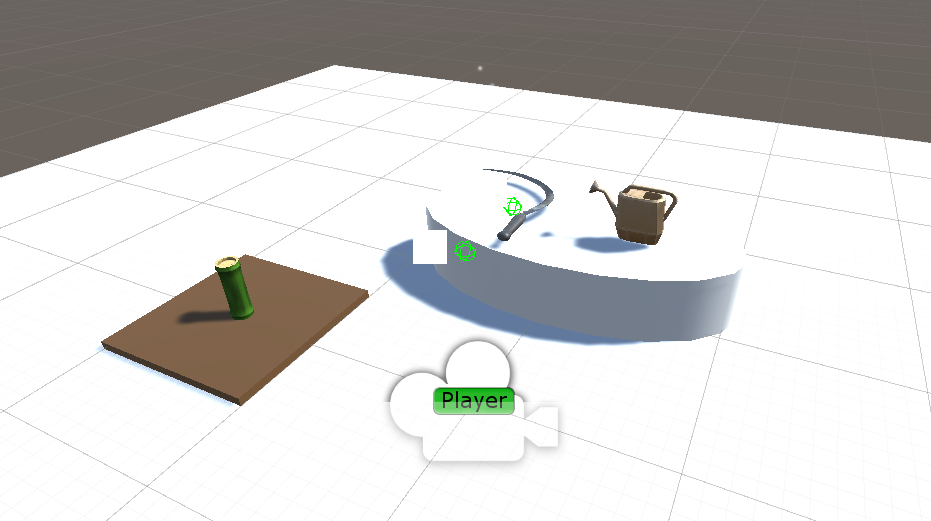
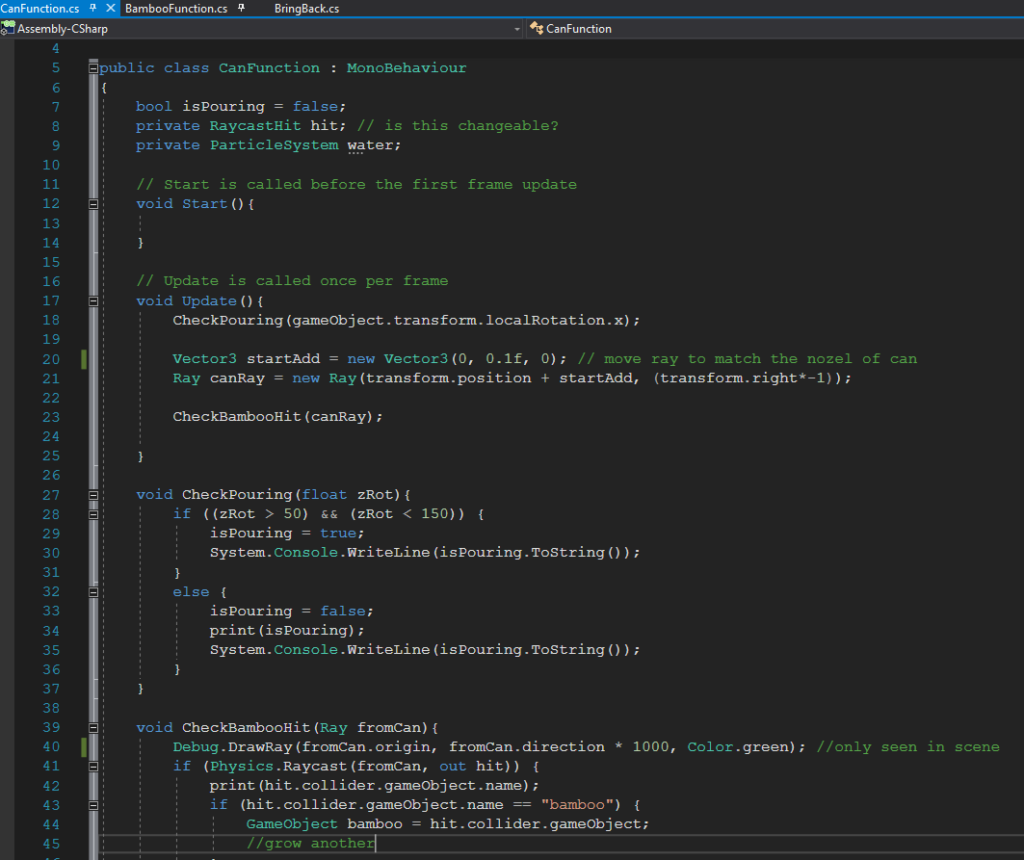
I worked relentlessly on the script responsible for the function of the watering can. My goal was to make a raycast that would detect the bamboo and then return then return it. I also wanted to make it so that the object knew when it was being poured and when it was not, this depended on the tilting of the object. Past a certain z rotation, as could be seen in the scene, it looked correct to be pouring water. I could not get the raycast to work (couldn’t even see the debug line that was supposed to show up) but I succeeded in making the program know when it was pouring.
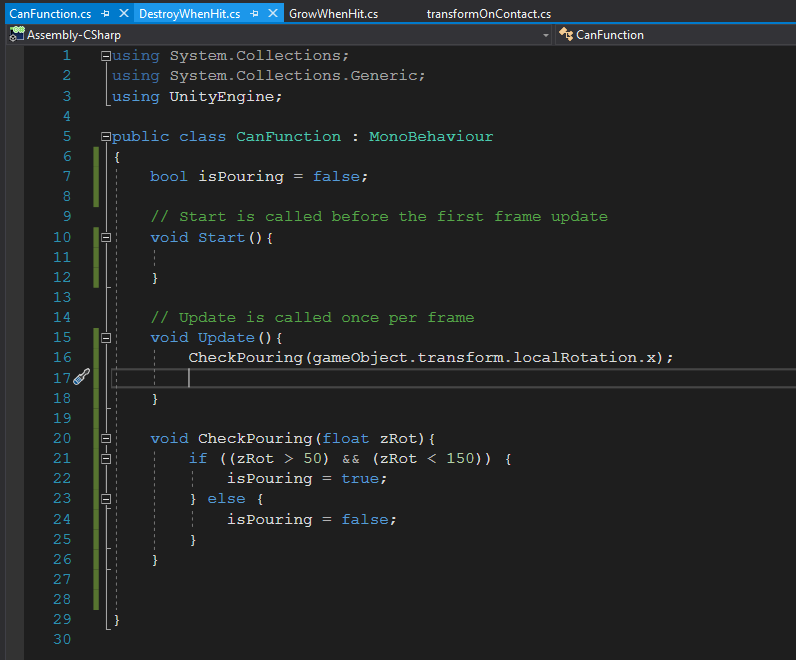
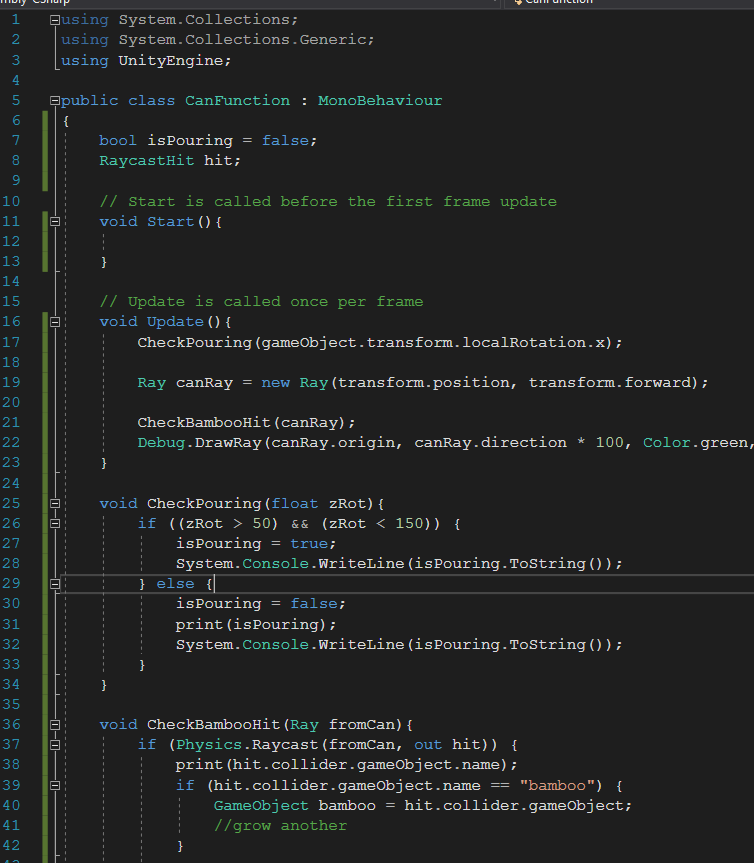
In the end I was very frustrated because the line wasn’t working and I didn’t know how to make the tilting of the can have any function. I placed a child object Particle System on the can when I thought the water should come from and then left the work for another day.
Mar 9
Today I work specifically on three scripts that I thought would be quite vital for the comfort and enjoyment of the final product. These three were: one that got the bamboo to be cut by the sickle, one that brought items back into range if thrown too far, and one that was responsible for the can’s particle system and detection of the bamboo.
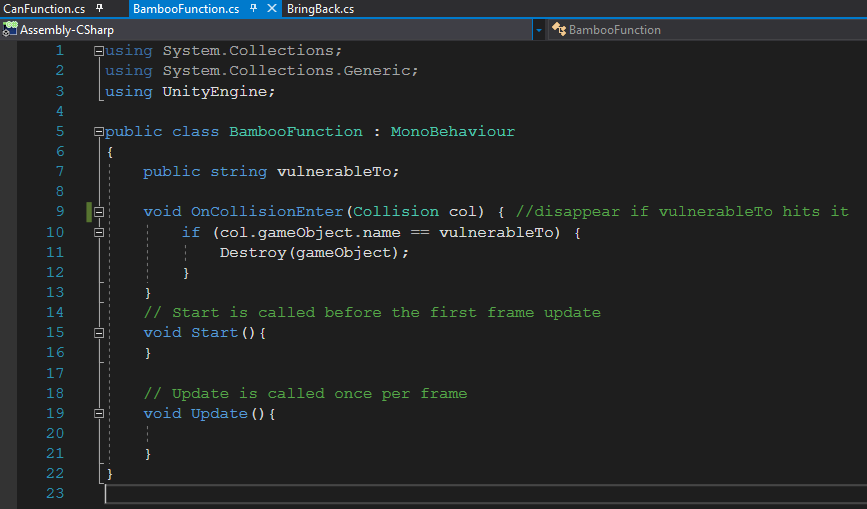
I started off with the bamboo script. I ended up keeping it quite simple and basing it off a previous scrip that I talked about a few days ago. I made it so that the object that could cut the bamboo was not definite. A certain name for the cutting object could be listed.
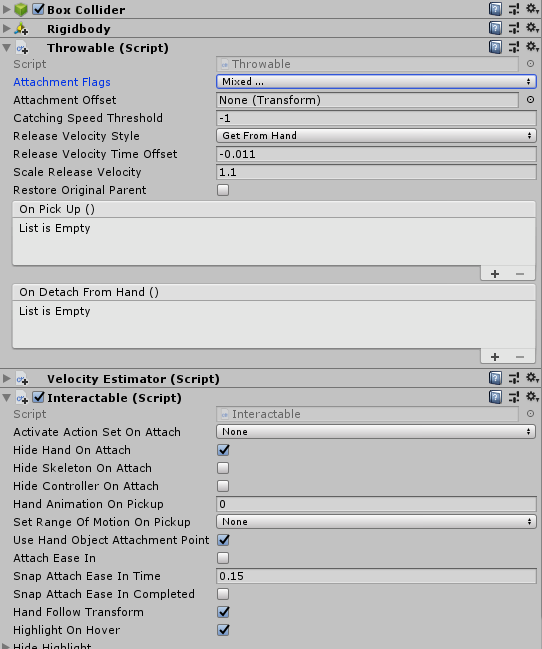
I noticed a large issue with the script when I was trying to hit the bamboo. Only when the sickle was dropped on the bamboo would it make it disappear, this is because there were some problems with the interaction script from SteamVR. The Attachment Flags had to be altered so that the sickle could not clip through items. This also made the entire system a bit more realistic.
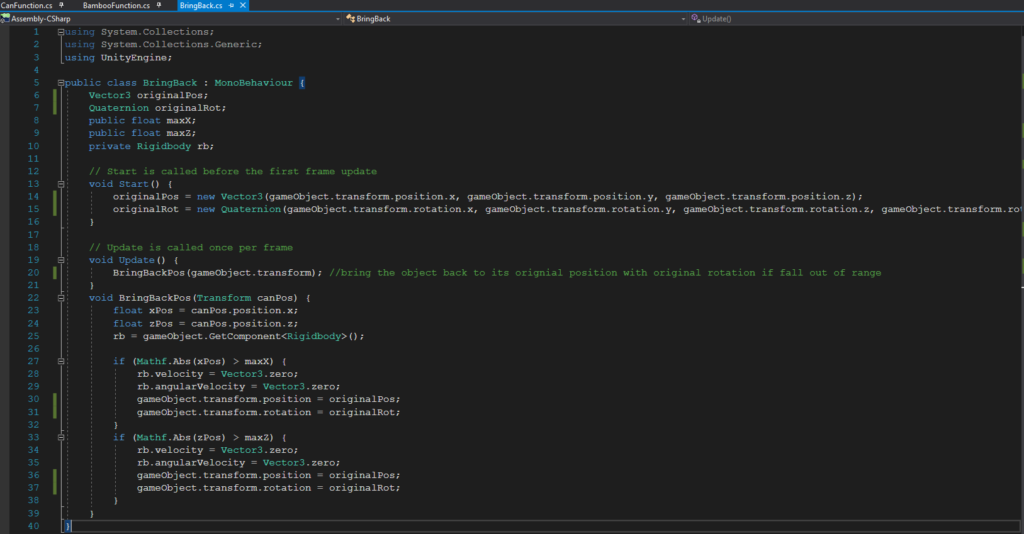
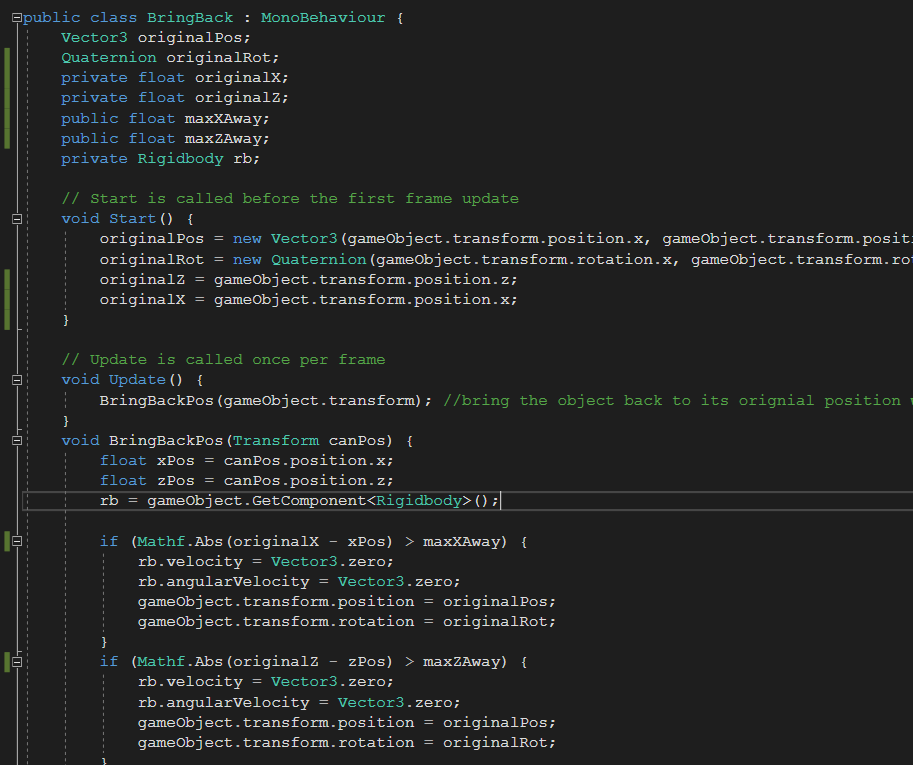
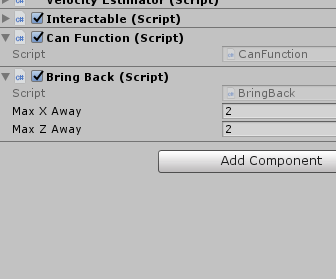
Next, I worked on the script to bring the items back from a distance. This took a lot of time but in the end I found out that you had to reset the rotation and the position of the item before bringing it back or else it would fly away. The final product looked very good. It would just drop back on the table once thrown too far. I also made it so that the distance it was being thrown and teleported back from could be altered. I found 2 to be good in the z and x direction. I attached this script to both the can and the sickle.
Finally, I tried working on the watering raycast issue but I ran out of time. I found out why the raycast debug line wasn’t seen though. I noticed that you could only see it in the scene editor. It was pointing the wrong way so I changed its direction (in a quite annoying method) and moved it up so that it aligned well with the nozzle (this required some testing since the scales are so messed up).
So much research, video watching, and web scrolling was required to get even here. It makes the final products feel so good when they work…
Mar 11
I noticed that it was difficult to know exactly when the watering can was pointing directly at the bamboo (causing it to grow) so I decided to add a pointer of sorts. Initially I tried to work with line renderers but this very difficult. It required the position to be continuously updated and the hit position (or end position of the line) could not be infinity. After not resolving the issue I found an extremely solution simply using a cube. I created a long thin cube oriented to way the raycast was and colored it orange just to make it more appealing and fitting with the environment.
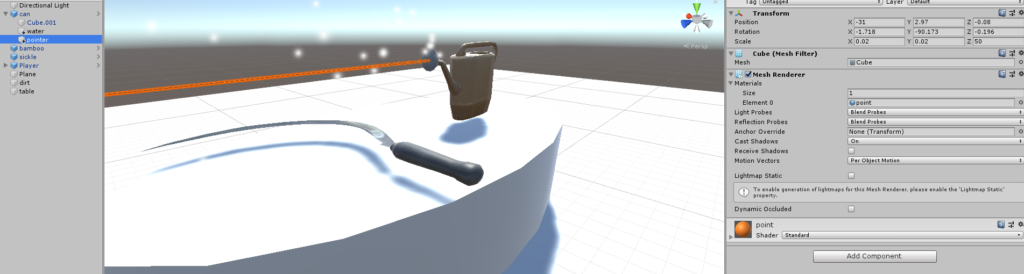
Next, I worked heavily on the growing of the bamboo. I found the growing-flower script from SteamVR and worked off that. I first made two different kinds of bamboo shoots, bambooOG and bamboo, which essentially are the stump the bamboo will grow out of and the bamboo that actually grows out. I did this because I noticed it would make the entire system easier. I could make solely the bamboo vulnerable to the sickle while keeping the bambooOG permanent. I added the growing script from SteamVR to the bambooOG.
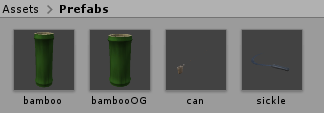
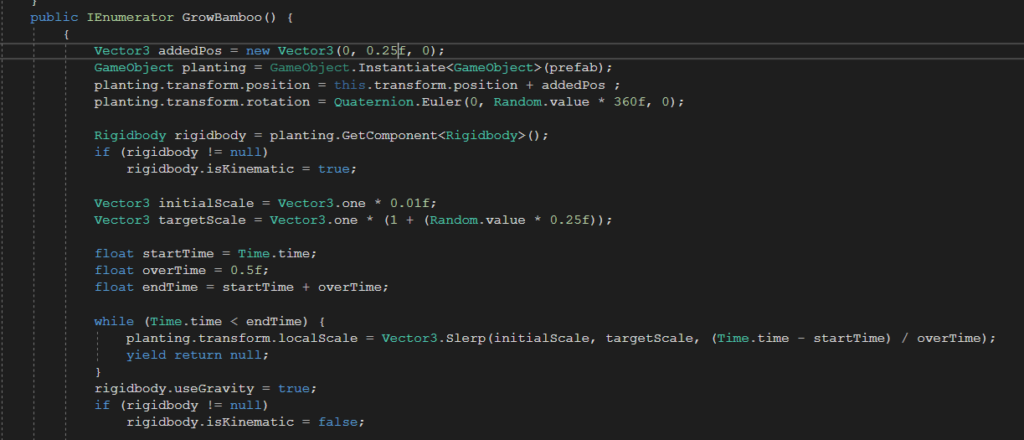
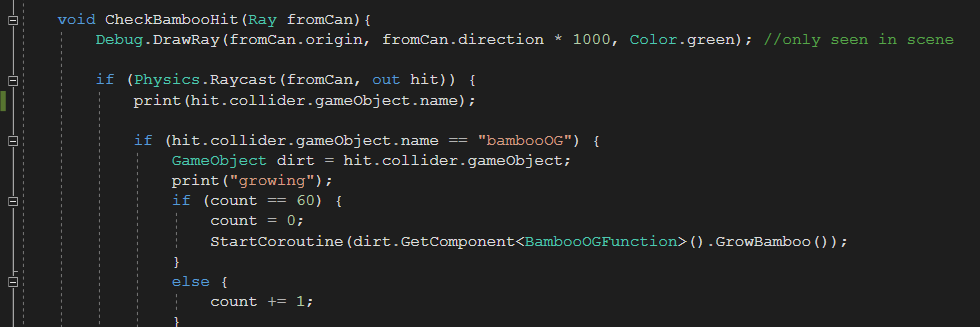
After trying to grow the bamboo I noticed 2 large problems. The first is that the bamboo would spawn way too fast because as long as the can was pointing at the bambooOG the growth would occur (so with every update). In order to resolve this I set a counter that would increase with every frame till 60 and then restart along with running the script. This meant that if the update occurred 60 times a second, then the bamboo would grow 1 per second. Next to tackle was the issue of the bamboo staying on top of each other after growing (and pushing the top ones up). The bamboo did not want to go any higher than 2 shoots tall, they continuously knocked the top one away. This occurred regardless of the position where you spawned the bamboo.
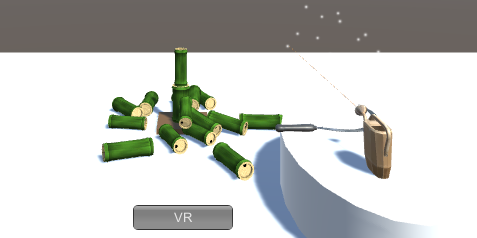
While doing trial and error with spawning positions and checking/unchecking all the boxes in all the scripts attached to the bamboo, I came across something wonderfully beautifully. You can lock the position and rotation of the spawned bamboo shoots by altering their prefab’s rigid body. What I tried first was freezing the y position but then I realized how that was incorrect (all the bamboo would just fly sideways. Next I increased the mass (for more stability and bounciness) and locked the x and z positions. I came up with a wonderfully appealing result. The bamboo would grow in an amazing way that looked like the individual segments were balancing on each other. Even better was the fact that the bamboos could be interacted with by the can (spinning them and bouncing them up and down). Cutting them down with the sickle was even more relieving too because you could see them quickly destroy (without any effect yet though).
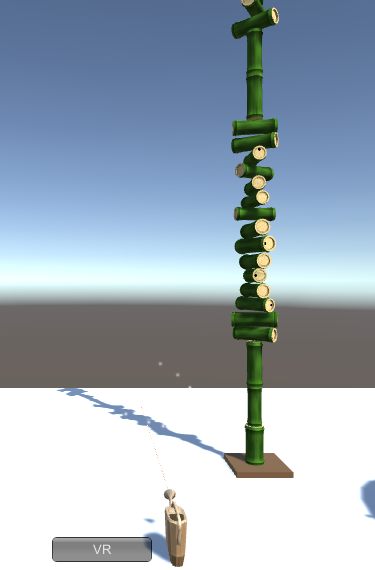
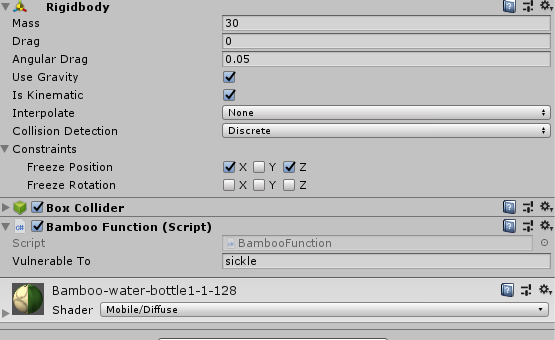
Naturally, I could have locked the rotations and it would really look like the bamboo was growing straight up but I didn’t think the results was nearly as appealing. With this constant balancing, the used was way more pleased (user tested with Max) and wanted to keep making them grow because it was partially random too. I also realized that the used wanted to keep growing the shoots endlessly so I decided to attach segment to the bamboo script that would release the freezing of the rigidbody when a certain height was reached (public int). The final step would be perhaps to make the bamboo disappear after a while once their height of x position was at or lower than ground level (to prevent cluttering).
Mar 12
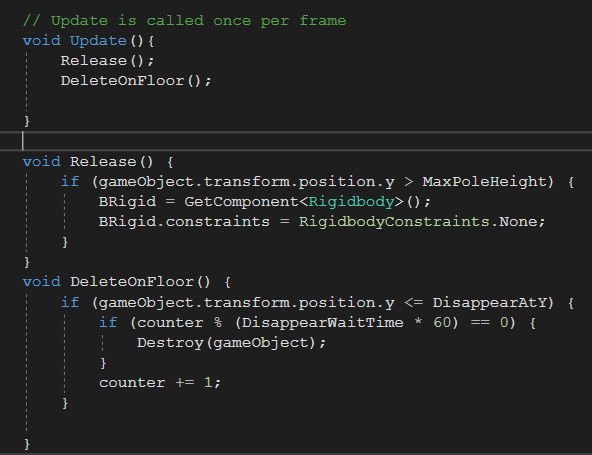
Today I made finishing touches to the coding. The first thing I worked on was making sure that the segments at the top of the bamboo sprout would fall off after a desired height and eventually disappear after some time on the ground. I did this by making two functions, one that took off all the restraints at a desired height (before when I did this there were still some problems) and another that waited a period of time to delete it. The first function was relatively simple but the second one required a counter. I tried using WaitForSeconds() but apparently that can only be use in a enumerator. I suspected update to run roughly 60 times a second so I made a counter based off that.
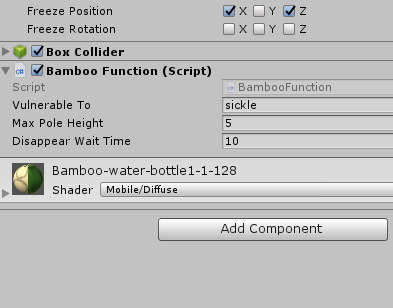
The next part I worked on was cleaning up the code of the teleporting-an-item-back script. I noticed that this code was not originally very lenient on placement. The items had to be close to the origin of the environment. I fixed this simply by changing some of the math operations. In the end everything worked wonderfully! The next step is to combine this with the environment!
Mar 17
Today was the final day. We all grouped together to make sure everything was working and to make sure that the last day of project development could go successfully. When I came in there were still some issues with the colliding of the water and the execution of the growing commanded. After three of us worked on the code for a while we finally got it to work. The large issue had to do with layers. In the end the terrain had to be placed in a different layer along with the can because the water particle system was constantly colliding with it. We go the physics and action to work efficiently. The environment looked good and the objects worked well.